


The EKS General Assembly is taking place in Bucharest.
The European Chess Union General Assembly Is Underway in Bucharest: Zurab Azmaiparashvili Re-elected as ECU President
European Chess Stays the Course as Current Leadership Receives a Renewed Mandate
The European Chess Union (ECU) General Assembly, one of the most important events on the European chess calendar, is currently taking place in Romania’s capital, Bucharest. Representatives of national chess federations have gathered to discuss the future development of chess across Europe, make key organizational decisions, and shape the strategic direction of the continent’s leading chess organization.
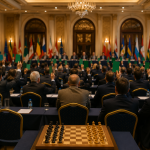
The highlight of the Assembly’s opening day was the election of the European Chess Union President. Following the vote, Zurab Azmaiparashvili was re-elected, securing another term at the helm of the organization.
European Federations Reaffirm Their Confidence
Azmaiparashvili’s re-election reflects the continued support of the majority of European chess federations for the ECU’s current strategic direction. During his leadership, the organization has significantly expanded its international activities, increased the number of official tournaments and educational programs, and strengthened cooperation with FIDE and national chess federations.
In recent years, particular emphasis has been placed on:
- developing youth and junior competitions;
- supporting women’s chess;
- digitalizing tournaments and educational projects;
- expanding the number of European championships across various disciplines;
- enhancing training programs for arbiters, organizers, and coaches.
These initiatives were among the key reasons why delegates once again placed their confidence in the incumbent president.
Key Topics on the General Assembly Agenda
In addition to electing the leadership, Assembly participants are discussing a broad range of issues that will shape the future of European chess over the coming years.
The agenda includes:
- the international competition calendar;
- the organization of future European Championships;
- the development of youth programs;
- funding for ECU projects;
- cooperation with FIDE;
- the introduction of new educational initiatives and digital technologies.
Meetings of this kind allow national federations to jointly develop policies and decisions that influence virtually every official competition organized under the auspices of the European Chess Union.
Who Is Zurab Azmaiparashvili?
Zurab Azmaiparashvili is a renowned Georgian grandmaster, the 2003 European Champion, and an experienced sports administrator. After retiring from professional competition, he focused on chess governance and has served as President of the European Chess Union since 2014.
During his tenure, the ECU has further strengthened its position as one of the world’s most active continental chess organizations. European Championships consistently rank among the strongest tournaments globally, attracting thousands of participants of all ages every year.
A New Term Brings New Challenges
Azmaiparashvili’s new presidential term is expected to be just as demanding. The European Chess Union faces several major priorities, including further promoting chess among young people, integrating modern technologies into tournament organization, expanding international cooperation, and increasing the appeal of European competitions for the world’s strongest grandmasters.
Educational initiatives will continue to play a central role by helping national federations develop chess at the grassroots level and attract new generations of players.
Looking Ahead
The re-election of Zurab Azmaiparashvili demonstrates the European chess community’s commitment to maintaining continuity in leadership while building upon existing initiatives. The General Assembly in Bucharest is expected to serve as the launching point for new decisions that will influence the development of European chess in the years ahead.
At a time when chess continues to grow rapidly in popularity around the world, gatherings such as this provide an essential platform for defining the strategic direction of the European chess family and ensuring the long-term success of one of the world’s strongest continental chess organizations.